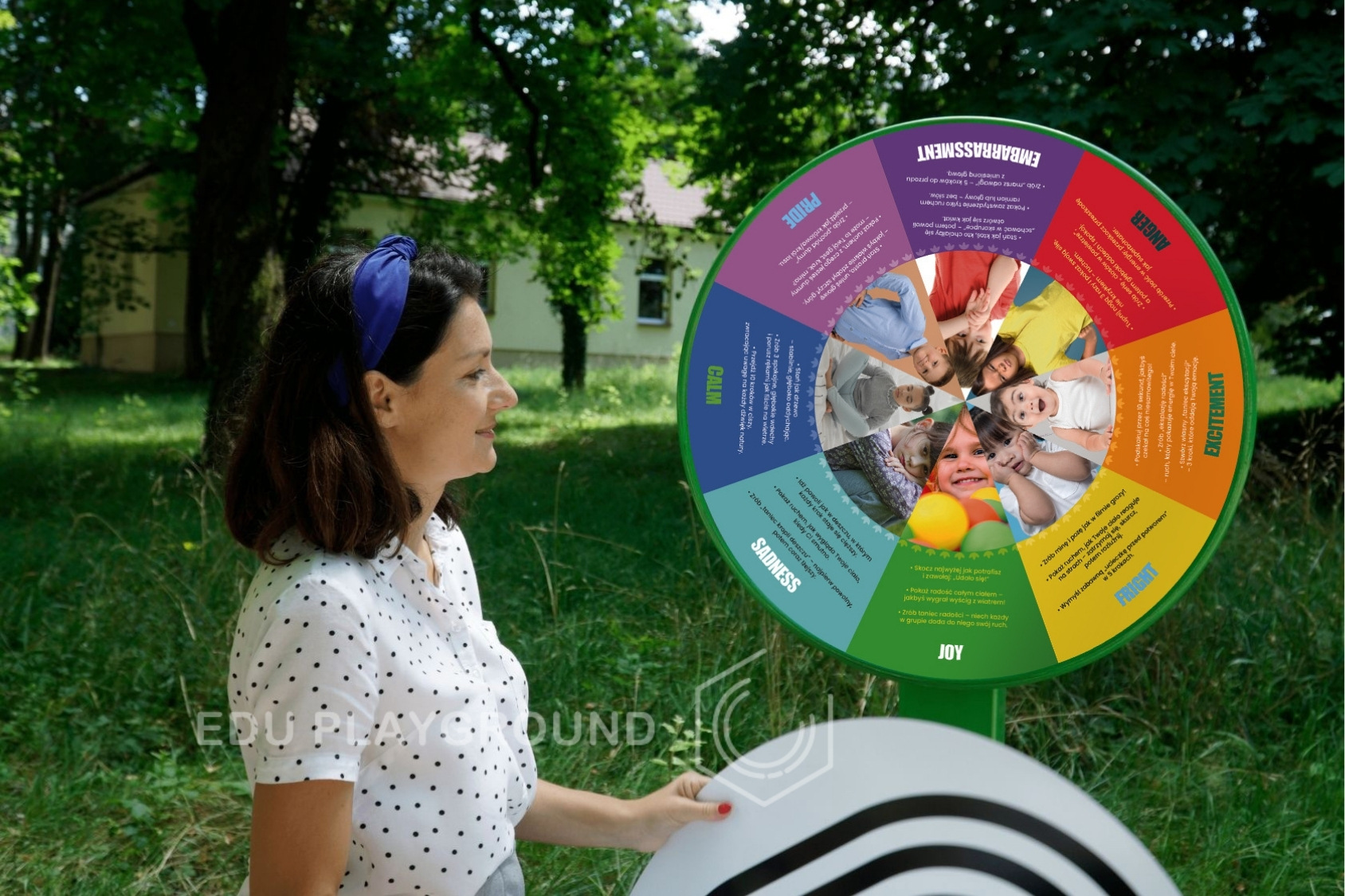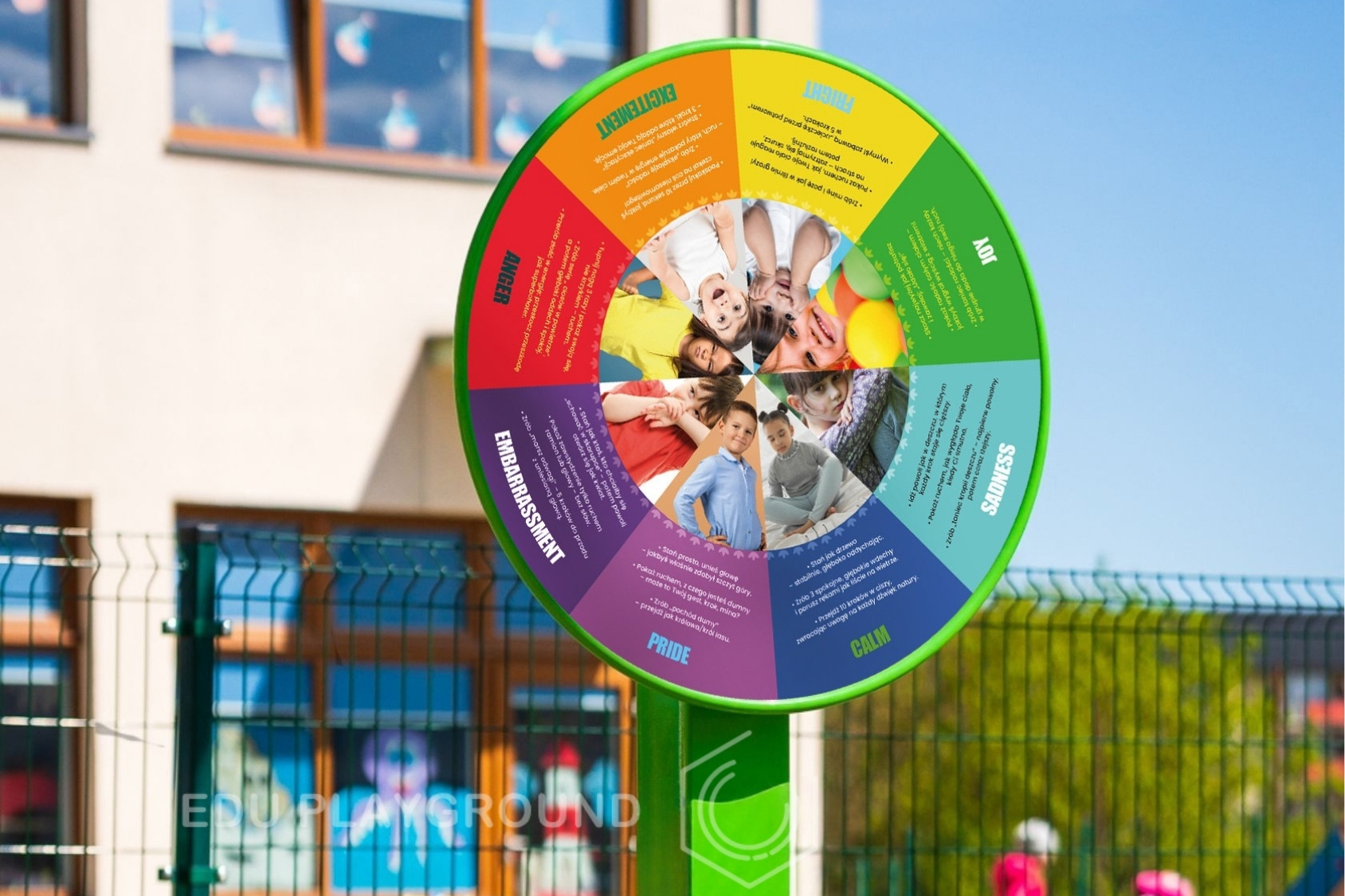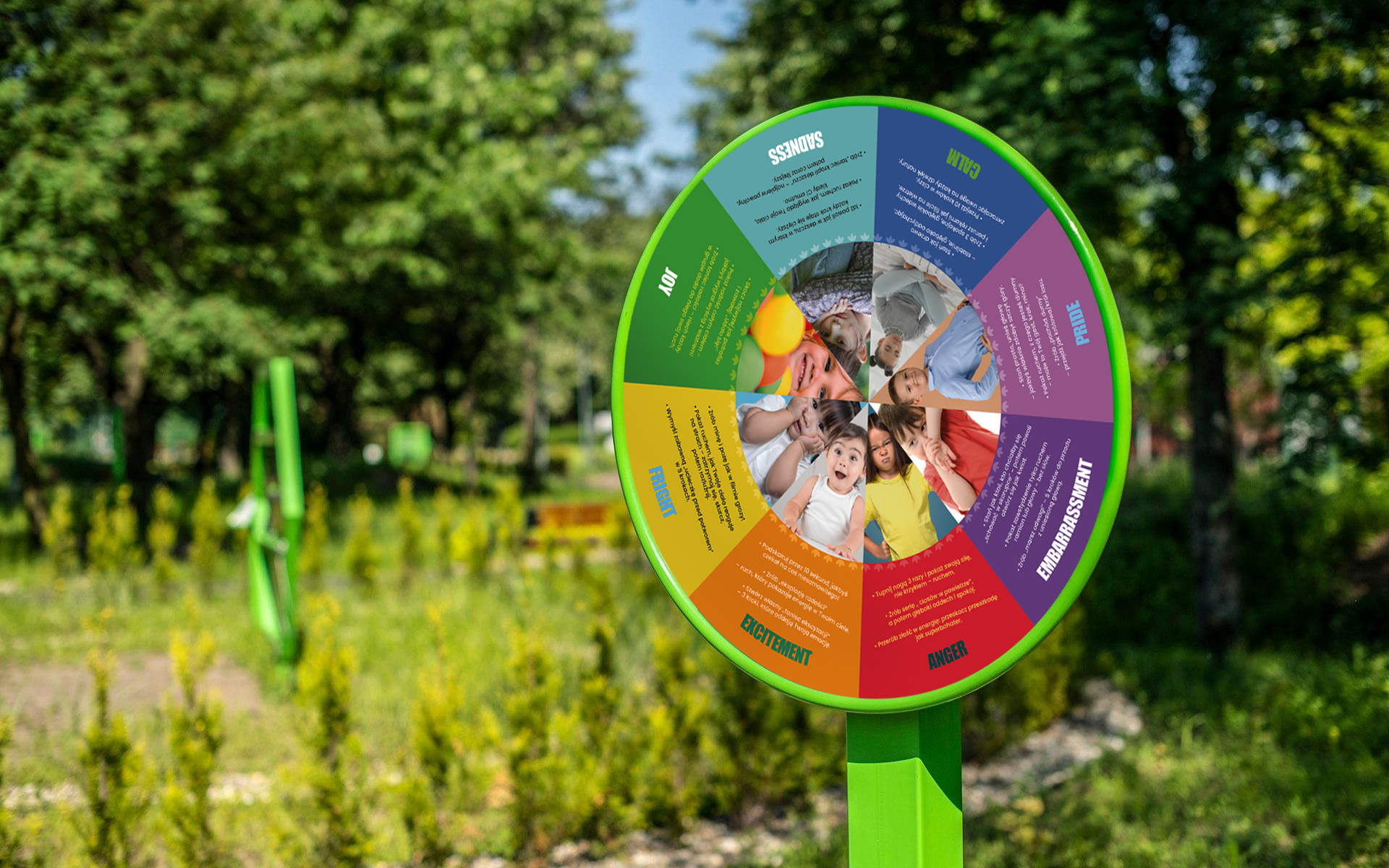
What is the Educational Wheel – Emotions?
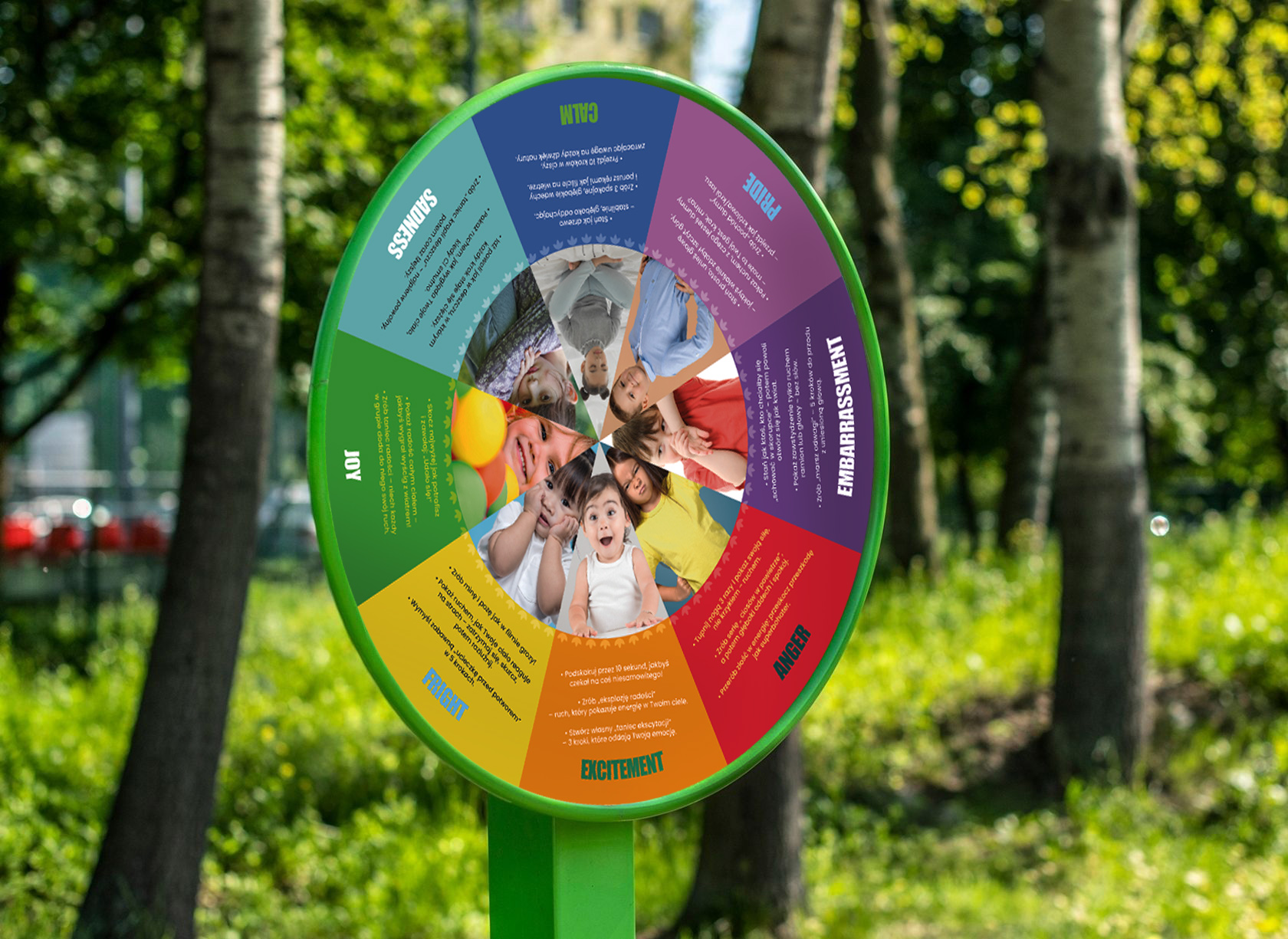
It is a therapeutic game-based device that supports children’s emotional and social development through movement, play, and experience. A child spins the wheel, draws an emotion, and then chooses one of three tasks that help them understand, name, and express that emotion. The Wheel also works great in a group setting — it can be combined with a charades-style game, where the whole class guesses the emotion being shown.
Why does the Educational Wheel work so well?
1. It develops emotional competencies
- helps children recognize and name feelings
- teaches how to express emotions through movement and facial expressions
- safely reduces emotional tension
- supports emotional regulation and self-awareness
2. It strengthens social skills
- teaches empathy and understanding of others’ emotions
- develops non-verbal communication
- integrates the group and works perfectly for Social Skills Training (SST)
- reduces the risk of conflicts through better self-understanding
3. It supports therapeutic goals
Ideal for:
- emotional therapy
- SST (Social Skills Training)
- behavioral therapy
- inclusive education
- working with children with different special educational needs
It is a tool that makes a therapist’s work easier while remaining attractive and engaging for children.
4. It teaches through movement
Spinning the wheel, selecting a task, and completing it develops:
- hand-eye coordination
- concentration
- movement planning
- group cooperation
How does it work?
- The child spins the wheel.
- The pointer stops on one of the emotions.
- The child chooses one of the three tasks assigned to that emotion.
- The task is performed individually or in a group.
- The rest of the children guess (in the group version) which emotion was shown.
It’s simple, engaging, and therapeutic for children of all ages.
What makes the Wheel of Emotions unique?
- an attractive game format that naturally engages children
- durable, sturdy construction
- simple to use – a “wow effect” in every group
- fully aligned with the goals of emotional education and school curricula
A Wheel That Never Gets Boring
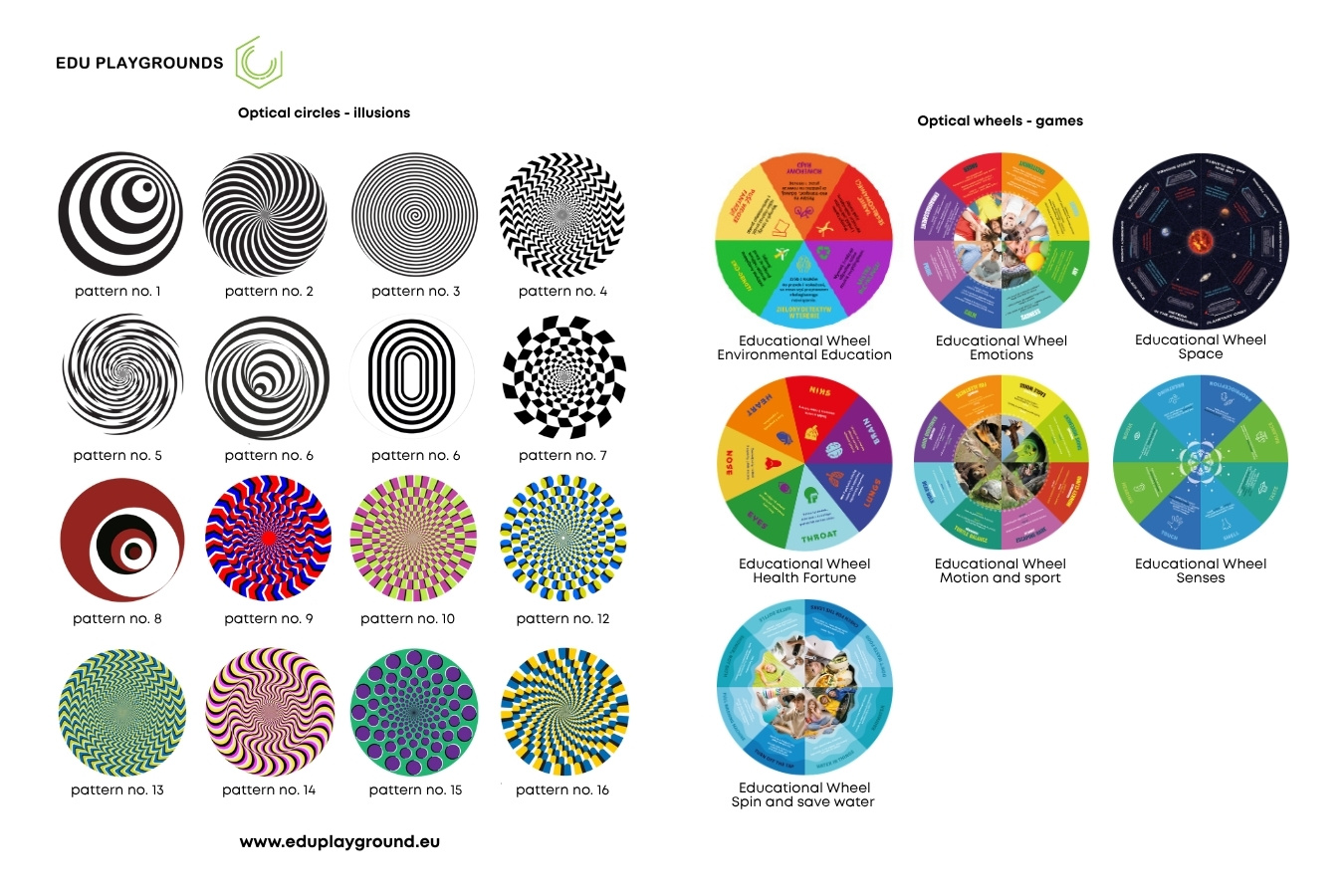
You can purchase interchangeable magnetic discs and transform the Educational Wheel – Emotions into a completely new playground game or therapeutic tool.
Available options include:
– 16 optical wheels (geometric illusions)
– movement-based wheels (health, sport and movement, ecology, space)
– themed educational and sensory sets
One device, dozens of possibilities.