
How to Develop a Child’s Ability to Concentrate
Contrary to what many people think, concentration is not a fully innate ability – it develops gradually with age and with a child’s experiences.
The ability to concentrate is one of the most important cognitive skills in children. Thanks to it, a child can focus on a task, remember information, and learn new things.
Even adults sometimes find it difficult to stay focused during a long meeting, and for young children it is even more challenging. It is important to remember that small children naturally have a shorter attention span than adults. For example, toddlers aged 1–3 can usually focus on play for several to a dozen minutes, while older preschoolers may maintain attention for about 20–40 minutes depending on the type of activity.
That is why it is so important to support children in developing this skill through appropriate learning conditions, play, and everyday habits.
What Is Concentration in Children?
Concentration is the ability to focus thoughts and actions on a single task for a certain period of time. This means that a child can ignore distracting stimuli and concentrate on what they are currently doing.
Many factors influence the level of concentration, including:
-
the child’s temperament and individual predispositions
-
age and stage of development
-
the home and preschool environment
-
the number of stimuli in the surroundings
-
the child’s emotions and well-being
Every child develops this skill at their own pace. Therefore, it is worth supporting it naturally instead of expecting long periods of focus that are not appropriate for the child’s age.
Limiting Excess Stimuli
One of the most common reasons for difficulty concentrating is an excess of stimuli in the environment. Too many toys, noise, or constant changes of activity can cause attention to shift quickly.
It is therefore helpful to ensure:
-
a calm place for play or learning
-
limiting the number of available toys
-
turning off or lowering the volume of televisions and other electronic devices
-
clear rules regarding screen time
Young children are especially prone to shifting their attention from one stimulus to another, which is why an organized and calm environment supports the development of concentration.
Learning Concentration Through Play
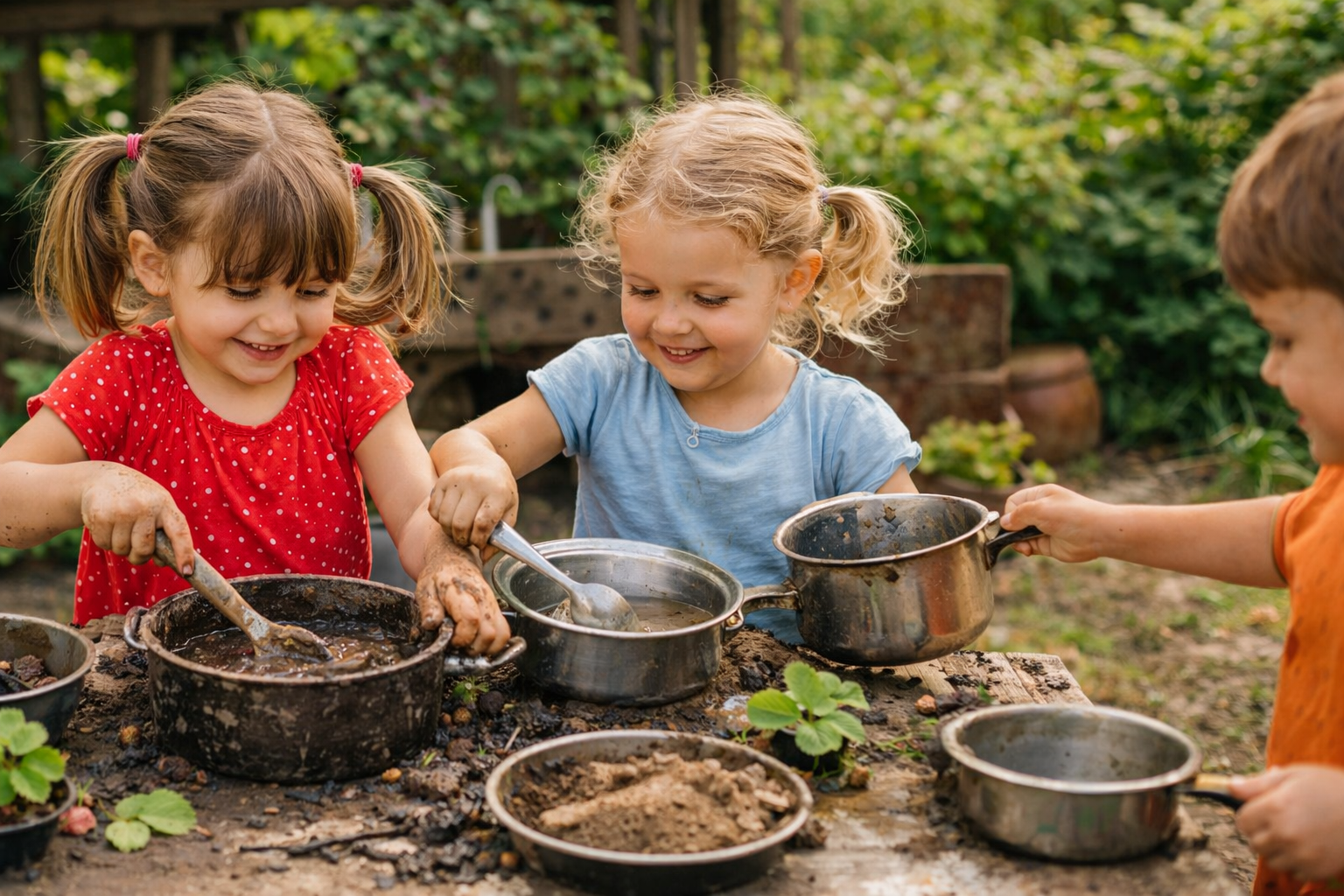
The best way to develop focus in young children is through play. Children learn naturally this way, without pressure or stress.
Well-chosen activities help gradually extend the time a child can concentrate and teach them to complete tasks they start.
It is important that games and activities are adapted to the child’s age and developmental abilities.
Activities That Support Concentration in Children Aged 1–2
At this age, the attention span is still short, so simple activities engaging the senses and movement work best.
Examples of activities:
-
Sorting blocks or balls – the child places items into a box or sorts them by color.
-
Transferring objects – the toddler moves items from one container to another, e.g., wooden blocks or large beads.
-
Building simple towers from blocks – the child focuses on maintaining the stability and balance of the structure.
-
Sensory play – pouring rice, groats, or sand into containers.
-
Looking at picture books – naming animals, colors, and objects together.
Such activities help the toddler practice attention, motor coordination, and cognitive development.
Activities That Support Concentration in Children Aged 3–4
Older preschoolers can focus longer on tasks, so more complex activities can be introduced.
Examples of activities:
-
Simple puzzles – help children learn patience and matching elements.
-
Memory games – develop both memory and concentration. Such a game can easily be prepared by cutting out tiles from a printed sheet containing pairs of themed pictures.
-
Building block constructions according to a pattern – the child must focus on instructions and the order of actions.
-
Tracing drawings or coloring books – support accuracy and focus.
-
Object-finding games – for example, “find the red block” or “look for the hidden teddy bear”.
Introducing such activities regularly helps children gradually extend their attention span and improves their ability to complete tasks that require focus.
Introducing Routine and a Daily Schedule
Children concentrate much more easily when their day has a clear structure. A consistent daily rhythm provides a sense of security and helps organize attention.
It is worth introducing:
- regular meal times
- time for play and rest
- bedtime rituals
- short daily planning with the child
Gradually teaching children to plan and complete tasks helps build perseverance and the ability to focus on one activity.
The Importance of Movement and Physical Activity
Movement plays a very important role in a child’s brain development. Physical activity helps regulate energy levels, improves mood, and supports the ability to concentrate.
Good options include:
- active play
- outdoor walks
- riding a bicycle
- obstacle courses
After an appropriate amount of movement, children often find it easier to focus on tasks that require attention.
Conclusion
Developing a child’s concentration is a process that requires time, patience, and the right conditions. The best results come from activities based on play, movement, and daily habits that support development.
It is worth remembering that the ability to focus grows with age and experience. By creating a calm environment, offering engaging activities, and providing emotional support, we can effectively help children develop this very important skill.
Thanks to this, children gain a solid foundation for learning, problem-solving, and coping with challenges in preschool and school.
If you are interested in any of our products, or would like to talk about possibilities to transform your school area, park or urban square,
call us at +48 512 450 033 or send us a message at: office@eduplayground.eu
#PlaygroundEducation #InnovativePlaygrounds #PlaygroundManufacturer #ActiveLearning #OutdoorClassroom